National Gallery of Art (Washington, USA) (National Gallery of Art) - Art Museum, located on the National Mall in Washington, DC. In Gallery One of the best museum collections in the world, including works of art of European and American artists: paintings, graphics, sculpture, watercolors, photographs, collections of porcelain and objects of decorative art.
The Louvre (Musée du Louvre) (Paris, France) - France's national museum, one of the most visited museums in the world and third largest in the world. In addition, the Louvre is one of the earliest European museums. The museum is located in the heart of Paris, on the right bank of the Seine. The basis of the Louvre is the fortress of King Philip II Augustus of France, built in the late 12th century. Like the Louvre Museum was opened to the public in 1793, during the French Revolution. The most famous masterpieces of the Louvre - Mona Lisa (Mona Lisa) by Leonardo da Vinci, the ancient Greek sculpture Venus de Milo (Venus de Milo) and Nike of Samothrace (Victory of Samothrace).
The Uffizi Gallery (Florence, Italy) - Uffizi Gallery (Galleria Degli Uffizi) - one of the most famous museums of paintings and sculpture in the world, is located on an area of the Uffizi in Florence. Its collection includes paintings by recognized masterpieces of all time, including works by Giotto, Simone Martini, Piero della Francesca, Fra Angelico, Filippo Lippi, Botticelli, Mantegna, Correggio, Leonardo da Vinci, Raphael, Michelangelo and Caravaggio. It is also well represented by German, Dutch and Flemish masters such as Durer, Rembrandt and Rubens.
The Metropolitan Museum (New York, USA) -
Metropolitan Museum of Art (The Metropolitan Museum of Art) was founded by a group of American businessmen, artists and thinkers, April 13, 1870. Meeting the museum's collection began with 174 paintings from the three European private collections. Metropolitan Museum of Art first opened to the public in 1872 in building 681 Fifth Avenue. In 1873 the museum moved into the mansion Douglas. And finally, in 1880 the museum took its current location - in Central Park on Fifth Avenue (from 80th to 84th streets).
The Hermitage (St. Petersburg, Russia)
The State Hermitage Museum (The State Hermitage Museum) - one of the largest museums in the world, has a collection numbering about three million works of art and monuments of world culture. As part of the Hermitage collection - paintings, drawings, sculpture and applied art, archaeological finds, numismatic material, the gallery of jewelry (gold and diamond pantries).
The Prado Museum (Madrid, Spain)
The Prado Museum (Museo Nacional del Prado) - one of the largest museums of collection of paintings, sculpture and decorative arts, as well as the world's masterpieces of Spanish, Italian, Flemish and other European schools.
British Museum (London, UK)
The British Museum (The British Museum), founded in 1753, is the first national public museum in the world and one of the largest museums in the world. The museum building occupies an area equivalent to nine football fields. The number of visitors during the existence of the museum has increased from 5,000 per year in the eighteenth century to nearly 6 million today.
The Egyptian Museum (Cairo, Egypt)
In the Egyptian Museum (Egyptian Museum) collected the world's largest collection of ancient Egyptian art. The history of the museum began in 1835 with an indication of the Egyptian government to hold an exhibition of museum objects collected, belonging to the Government, in order to prevent looting. The building of this museum in the neo-classical style was built in 1900, designed by French architect Marcel Dyunona (Marcel Dourgnon). The museum collection contains over 120,000 works of Egyptian art from the prehistoric era to the Greco-Roman period.
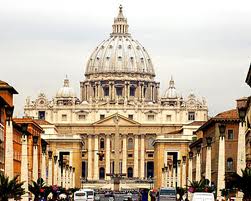
The Vatican Museums (Vatican City, Italy)
The Vatican Museums (Musei Vaticani) - set the largest museums in the world, bringing together the most valuable museum collections and unique papal palaces Vatican City State.
Showing posts with label museums. Show all posts
Sunday, January 1, 2012
Sunday, August 21, 2011
Museum of Vanished Taste in Kolomna
The idea to create a museum of meringue was born in April, 2008. The masterminds behind this project set out not only to restore the famous authentic flavor of the meringue. They wanted to create a space for visitors to experience something completely new. “We wanted our museum to immerse visitors in the atmosphere of a provincial house and to represent the everyday culture of the 19th century,” said Natalya Nikitina, director of the Museum of Vanished Taste...
The memory of Kolomna’s meringue did not reemerge until nearly a full century later. In 2008, the city hosted a sports competition accompanied by a cultural program, in which the city decided to present a unique symbol of Kolomna, something that set it apart from all others cities. And so the inspiration was sparked to restore the ancient recipe. It took a great deal of time and effort to find the recipe and recreate the complicated technique of preparing the meringue.
Apple meringue is a truly original Russian dessert created in Kolomna in the 16th century. Throughout history, lovers of this delicacy have included Ivan the Terrible, Catherine the Great, Fyodor Dostoyevsky and Leo Tolstoy. The meringue was made by starting with a special local variety of sour apples, and adding honey, nuts, and garden and wild berries. During World War I, producers of the meringue closed one after another, and the recipe that had been perfected over the centuries was lost nearly overnight.
The interior of the museum was recreated based on descriptions by Kolomna writers. On Saturdays, a staged presentation of Chekhov’s plays is included in the cultural program. Photo: a museum guide laying the table for guests.
The Podolsk pastila contains no artificial color, preservatives, flour or starch. Its high pectin and fiber content make it a healthy treat. It is also distinctively low in calories, and along with milk, is recommended for industry workers in hazardous conditions.
The creators of the museum continue their search for “new” traditional flavors of the delicacy. They have already created the favorite flavors of Leo Tolstoy and Fyodor Dostoyevsky. The museum features a small shop where visitors can buy the delicacies neatly packed in elegant boxes.
The museum’s management is planning to open a café, a Museum of Sweet Dreams and a historical house that will expand the visitors’ journey into the 19th century
The memory of Kolomna’s meringue did not reemerge until nearly a full century later. In 2008, the city hosted a sports competition accompanied by a cultural program, in which the city decided to present a unique symbol of Kolomna, something that set it apart from all others cities. And so the inspiration was sparked to restore the ancient recipe. It took a great deal of time and effort to find the recipe and recreate the complicated technique of preparing the meringue.
Apple meringue is a truly original Russian dessert created in Kolomna in the 16th century. Throughout history, lovers of this delicacy have included Ivan the Terrible, Catherine the Great, Fyodor Dostoyevsky and Leo Tolstoy. The meringue was made by starting with a special local variety of sour apples, and adding honey, nuts, and garden and wild berries. During World War I, producers of the meringue closed one after another, and the recipe that had been perfected over the centuries was lost nearly overnight.
The museum is located in a 19th century pavilion. The journey back in time begins when you open the gate: you are greeted by the hostess, clad in a 19th century crinoline dress and cap. The sweet aromas of apples, cinnamon and spices wafts through the air and envelopes you right from the doorstep. The hostess offers you tea and meringue, and invites you to listen to the stories of the town.
The interior of the museum was recreated based on descriptions by Kolomna writers. On Saturdays, a staged presentation of Chekhov’s plays is included in the cultural program. Photo: a museum guide laying the table for guests.
The Podolsk pastila contains no artificial color, preservatives, flour or starch. Its high pectin and fiber content make it a healthy treat. It is also distinctively low in calories, and along with milk, is recommended for industry workers in hazardous conditions.
The creators of the museum continue their search for “new” traditional flavors of the delicacy. They have already created the favorite flavors of Leo Tolstoy and Fyodor Dostoyevsky. The museum features a small shop where visitors can buy the delicacies neatly packed in elegant boxes.
The museum’s management is planning to open a café, a Museum of Sweet Dreams and a historical house that will expand the visitors’ journey into the 19th century
Saturday, May 28, 2011
Fancy building museums in the world
The world is full of unusual buildings, demonstrating the flight of the thought of an architect. Quite often, these buildings are built as a museum. Today's look at the ocean and the surf museum, Art Museum and the Museum of Nanjing Sifang Felix Nussbaum.
1. Felix Nussbaum Museum
Felix Nussbaum Museum (Felix Nussbaum) - continuation of the Museum of Cultural History in Osnabrück, he focuses on the work of Felix Nussbaum, a Jewish artist born in Osnabrück in 1904.
2. The museum illustrations and pictures taken before his murder at Auschwitz, all focused on the themes of racism and intolerance.
3. The building was completed in summer 1998. with the participation of firms Reinders and partners, it was visited by more than 4 million visitors.
4. The building consists of three main parts: high and narrow central corridor Nussbaum, long the main part and the bridge that connects the building with the old museum.
5. The building's design reflects the life of Felix Nussbaum, the track suddenly break off, unpredictably intersect and lead to a deadlock.
6.
7.
8.
9. Center for Ocean and surf
Center for Ocean and Surf (Cité de l'Océan et du Surf) is studying the surf and the sea, their role in our leisure, science and ecology.
10. The shape of the building comes from the spatial concept of "under the sky / under the sea. " Form Code "under heaven" creates the character of the main outdoor space "Place of the ocean. "
11. Convex constructive ceiling creates an exhibition space "under the sea. " Spatial features of the building begins at the entrance, where hallway and stairs pass extensive view from the top of exhibition space, as they pass along the dynamic curved surface, which is enlivened by a moving image and light.
12. Certain union into a single entity concept and the topography makes the building unique shape. In relation to the ocean, form a set of open parking buildings will be extended through the landscape.
13. Landscape with corners slightly cupped shape, blending the fields and native vegetation are a continuation of the building and will take the festivals and daily activities, they are integrated with the device of the museum.
14. Art Museum Nanjing Sifang
The new museum is located at the entrance of modern international exhibition of architecture in a lush green landscape Pearl Spring near the city of Nanjing, China. It examines the changing point of view, the layers of space, the expansion of mist and water, which characterizes the depth of displacing each other space mysteries of early Chinese painting. Soon Art Museum Nanjing Sifang will be open to visitors.
15. Perspective - the fundamental historical difference between Western and Chinese painting. After the 13th century western painting developed the idea of the vanishing point in the fixed term. Chinese artists, though aware of the term, rejected the method of single vanishing point, but instead they created a landscape with "parallel perspective", in which the viewer travels inside the picture.
16. The museum has a form of "field" of prospective parallel spaces and garden fencing in a black base, formed of bamboo, over which hangs light "figure". Direct transitions to the ground floor is gradually transformed into the winding passages above figures
17. The upper gallery, hanging high in the air, turns clockwise, and culminates in a "prescribed in a given situation" as the city of Nanjing in the distance. The value of this space becoming an urban village with the help form on the capital of the great Ming Dynasty city of Nanjing.
18. A courtyard paved with reused old bricks from the ruined Hooton courtyards in the center of Nanjing.
19. Limitation Flowers Museum black and white ties him with an ancient painting, but also serves as a backing for the transfer of colors and textures of works of art and architecture, which will be exhibited in a museum.
20. Bamboo, previously grown on the place of the museum, was used to design the base with black intersections on the walls. The museum used geothermal cooling and heating and recycled rainwater.
1. Felix Nussbaum Museum
Felix Nussbaum Museum (Felix Nussbaum) - continuation of the Museum of Cultural History in Osnabrück, he focuses on the work of Felix Nussbaum, a Jewish artist born in Osnabrück in 1904.
2. The museum illustrations and pictures taken before his murder at Auschwitz, all focused on the themes of racism and intolerance.
3. The building was completed in summer 1998. with the participation of firms Reinders and partners, it was visited by more than 4 million visitors.
4. The building consists of three main parts: high and narrow central corridor Nussbaum, long the main part and the bridge that connects the building with the old museum.
5. The building's design reflects the life of Felix Nussbaum, the track suddenly break off, unpredictably intersect and lead to a deadlock.
6.
7.
8.
9. Center for Ocean and surf
Center for Ocean and Surf (Cité de l'Océan et du Surf) is studying the surf and the sea, their role in our leisure, science and ecology.
10. The shape of the building comes from the spatial concept of "under the sky / under the sea. " Form Code "under heaven" creates the character of the main outdoor space "Place of the ocean. "
11. Convex constructive ceiling creates an exhibition space "under the sea. " Spatial features of the building begins at the entrance, where hallway and stairs pass extensive view from the top of exhibition space, as they pass along the dynamic curved surface, which is enlivened by a moving image and light.
12. Certain union into a single entity concept and the topography makes the building unique shape. In relation to the ocean, form a set of open parking buildings will be extended through the landscape.
13. Landscape with corners slightly cupped shape, blending the fields and native vegetation are a continuation of the building and will take the festivals and daily activities, they are integrated with the device of the museum.
14. Art Museum Nanjing Sifang
The new museum is located at the entrance of modern international exhibition of architecture in a lush green landscape Pearl Spring near the city of Nanjing, China. It examines the changing point of view, the layers of space, the expansion of mist and water, which characterizes the depth of displacing each other space mysteries of early Chinese painting. Soon Art Museum Nanjing Sifang will be open to visitors.
15. Perspective - the fundamental historical difference between Western and Chinese painting. After the 13th century western painting developed the idea of the vanishing point in the fixed term. Chinese artists, though aware of the term, rejected the method of single vanishing point, but instead they created a landscape with "parallel perspective", in which the viewer travels inside the picture.
16. The museum has a form of "field" of prospective parallel spaces and garden fencing in a black base, formed of bamboo, over which hangs light "figure". Direct transitions to the ground floor is gradually transformed into the winding passages above figures
17. The upper gallery, hanging high in the air, turns clockwise, and culminates in a "prescribed in a given situation" as the city of Nanjing in the distance. The value of this space becoming an urban village with the help form on the capital of the great Ming Dynasty city of Nanjing.
18. A courtyard paved with reused old bricks from the ruined Hooton courtyards in the center of Nanjing.
19. Limitation Flowers Museum black and white ties him with an ancient painting, but also serves as a backing for the transfer of colors and textures of works of art and architecture, which will be exhibited in a museum.
20. Bamboo, previously grown on the place of the museum, was used to design the base with black intersections on the walls. The museum used geothermal cooling and heating and recycled rainwater.
Subscribe to:
Posts (Atom)


