According to the conclusions of experts visited the Earth by aliens who have sverhznaniem, forever altering the course of human history. What if it all - right? On this topic there was a lot of questions, theories, and in her field research conducted
Lines of Nazca
Nazca lines drawn by the valley of Nazca drawings in Peru for decades puzzled archaeologists. These characters are great pictures of animals and plants. Because of their size, they are visible only from the bird's-eye view - and there is no evidence that the people of Nazca invented the flying machine. But according to some specialists paleocontacts these figures were used as landing strips for space ships.
Wiman
Many Sanskrit stories written by more than 2 millennia ago in India, contain information about the mythical flying machines called vimana. By comparing the similarities in the descriptions of Wyman and UFOs, ufology ancient suggested that visited India in the past, astronauts from other planets.
Pyramids at Giza
Specialists paleocontacts believe that aliens from other planets have helped people build architectural wonders, such as the Egyptian pyramids. Giza - it is not only an incredible place with an architectural point of view, it is located at the intersection of the longest lines of latitude and longitude. How is this possible? Did the ancient builders knew the size of the Earth?
Teotihuacan
Specialists paleocontacts emphasize that some of the ancient monuments are evidence of a profound knowledge of astronomy possessed by their builders, far superior knowledge of subsequent crops. Pyramid of the Sun in Teotihuacan, Mexico, located in the center of the complex of pyramids, each of which represented the planet in the Solar System.
The Sumerians
The Sumerians were one of the oldest known civilizations. These people believed that it was created by the Anunnaki, a group of aliens. The Sumerians believed that the Anunnaki came down to earth from the stars, to get gold. According to ancient myths for the Anunnaki workers were needed, so they are genetically designed and created by the Sumerians (or people).
The sarcophagus of Pacal
In the 7th century, Pacal the Great ruled the Mayan city of Palenque. He was buried inside the pyramid called the Temple of the Inscriptions. The intricate patterns on the lid of his sarcophagus were considered a classic masterpiece of Maya, as well as evidence for the UFO appeared. From their point of view, Pacal is drawn in a spaceship during takeoff, with a hand on the control panel and an oxygen tube in his mouth.
Mahabharata and Ramayana
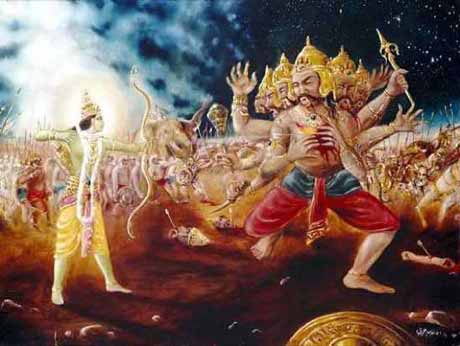
This ancient Indian epics telling of the aircraft, similar to nuclear, explosions and powerful weapon. They were written over 2000 years ago. It's just a good story, or actually they have a grain of truth?
Puma Punku
Puma Punku located in South America, in the Bolivian highlands. This is a place of stone ruins of the huge, carefully cut blocks. Such products would have been impossible to build without modern tools and machines, but it ruins more than 1000 years. Specialists paleocontacts hypothesized that the aliens have advanced engineering technologies have created this place, or possibly give advice to people who could build it. Puma Stones Punku consist of granite and diorite, which is harder than just a diamond. These stones are not only very difficult to cut, but they weigh a lot, one stone - about 800 tons.
Aliens and the Third Reich
Invincible army and a powerful weapon created to intimidate and destroy. During the 2nd World War, Germany had the most advanced technical and military forces in the world. Technologies such as jet bomber and aimed a guided missile, were built for a blitzkrieg. But what made the German scientists so advanced? Were they smarter than others? No, they just saw the ancient texts, not as myths, as well as a source of historical and scientific facts. The Nazis transferred to such texts as, for example, the Indian Sanskrit into German.
flower of Life
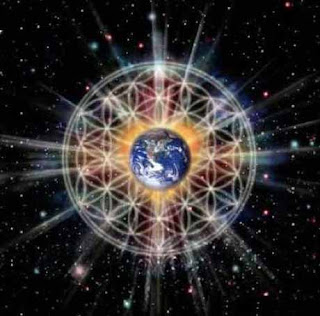
Flower of Life was already known in ancient times, appearing in the temple of Osiris, Romania, Israel, China and many other places. Everything in the universe has a geometric proportions, whether human, tree, animal, solar system or star. Metatron's cube is formed from the flower of life, which forms the five geometric solids (tetrahedron, hexahedron, octahedron, dodecahedron, dvadtsatigrannik) that make up the universe. Each element in the periodic table of elements has a geometric relation to one of these bodies. Therefore, all that modern science knows about the elements and the reality is tied to the geometric solids originating from the cube of Metatron, which emerged from the fruit of life, and he, in turn, from the Flower of Life.
Showing posts with label history. Show all posts
Tuesday, May 8, 2012
Wednesday, June 15, 2011
Wonderful ancient cities and kingdoms
We offer a look at the photos of amazing ruins of ancient cities that still have not lost their beauty and their greatness.
1. Angkor Wat, Cambodia
Title Anchor Wat in Khmer means "city-church." This is the great religious building of any known on Earth was built in the early XII century during the reign of King Suryavarman II. The giant temple dedicated to Vishnu, one of the supreme gods of Hinduism. The huge temple symbolizes the sacred Mount Meru - the center of all universes and the abode of the gods. In the central part of the church are more tall buildings, and passes around the perimeter of the moat width of 200 m. The temple is decorated with five majestic towers in the shape of lotus flowers, covered with carved figures. Many of the sculptures of this complex were severely damaged in the late 70s of last century during the reign of Pol Pot. The total height of the temple 65 m above the ground.
2. Anuradhapura
Anuradhapura and today is the capital of North-Central Province of Sri Lanka. Today the city is divided into two parts - the old and new, separated by a river. In 1950 the government resettled residents especially in the "new city" to save the ancient temples from destruction. The first settlements in this area date back to the VI century BC In 377 BC the city became the capital of the Sinhala state. In the eleventh century AD Anuradhapura was almost completely destroyed when the island was captured by the Chola rulers of South Indian States. Today it attracts tourists and Buddhist pilgrims from all over the world.
3. Guge Kingdom, Tibet
The founder of the Tibetan kingdom was the son of King Glang Darma, who ruled around the tenth century. 700 years after its foundation, the kingdom perished under mysterious circumstances, and its population, numbering tens of thousands of people disappeared without trace. The surviving ruins of the palace, which stands on an impregnable rock near the cliff give an idea of how high the culture of this ancient kingdom. In addition to the numerous above-ground facilities in the palace complex are also caves with murals painted walls, and intricate underground labyrinth.
4. Hampi, India
Hampi - a small Indian village, which is located right in the middle of the ancient ruins of Vijayanagara (the title translates as "City of Victory") - the capital of ancient Vidzhayanagarskoy Empire, which until Serena XVII century occupied the entire south Indian subcontinent. Today the remains of the temple towers of the Gopuram tower in the middle of the village. Because of this unique architectural heritage of the village of Hampi is included in the UNESCO World Heritage Site.
5. the Kingdom of Kerma
This kingdom was competing with its power and majesty of ancient Egypt from about 2500 BC to 1520 BC The Kingdom of Kerma was located in the valley of the Nile in Upper Nubia, and was an important trade center of its time. Today in towering high-preserved cemetery mounds that cover the imperial burial. Some archaeologists believe that the Kerma may have some connection with the kingdom of Kush, which is mentioned in Genesis.
6. State Kotte, Sri Lanka
This state existed on the island of Sri Lanka in the XV - XVI centuries, and dragged along almost the entire western coast of the island. Its last ruler, who managed to unite under his rule the whole island, was King Parakramabahu VI, who ruled the country for almost 55 years. After his death, the struggle for power is so acute that the state was divided into three areas that are in a constant state of war. In the 1550s the state was fully captured Cote Portuguese.
7. Koguryo Kingdom
Today, the remains of 14 tombs of the rulers of this state are scattered in three cities: Vunu, Guoney and Wanda, are in the Chinese provinces of Jilin and Liaoning. In ancient times, all these cities belonged to the Koguryo. Representatives of the Koguryo dynasty ruled in northern China, and in the northern part of the Korean Peninsula from 277 BC and up to 668 AD
8. Sabaean kingdom
This is an ancient state existed on the territory of Yemen in the late 2nd millennium BC on the III. BC It was one of the largest states in the ancient Near East. Dawn Sabaean state accounted for the VIII century. BC In the picture you can see the ruins of the ancient Sabaean temple, which was recently discovered by archaeologists. The temple was decorated huge columns and statues of the rulers.
9. Historical Park, Sukhothai, Thailand
As part of this historic monument, located in the northern part of Thailand, is a lot of beautiful old churches. The city itself Sukhothai (the title translates as "Dawn of Happiness") was the capital of Sukhothai in the XIII - XIV centuries. The city, whose territory is 70 square kilometers, surrounded by perimeter walls, while in the city was the royal palace, and 26 churches. The biggest of these temples - Wat Mahathat, combining the temple-tower and a Buddhist stupa. Inside the temple there is a large statue of a seated Buddha
Thursday, June 9, 2011
Abandoned and Amuzing Gulliver Park
Saturday, May 28, 2011
Fancy building museums in the world
The world is full of unusual buildings, demonstrating the flight of the thought of an architect. Quite often, these buildings are built as a museum. Today's look at the ocean and the surf museum, Art Museum and the Museum of Nanjing Sifang Felix Nussbaum.
1. Felix Nussbaum Museum
Felix Nussbaum Museum (Felix Nussbaum) - continuation of the Museum of Cultural History in Osnabrück, he focuses on the work of Felix Nussbaum, a Jewish artist born in Osnabrück in 1904.
2. The museum illustrations and pictures taken before his murder at Auschwitz, all focused on the themes of racism and intolerance.
3. The building was completed in summer 1998. with the participation of firms Reinders and partners, it was visited by more than 4 million visitors.
4. The building consists of three main parts: high and narrow central corridor Nussbaum, long the main part and the bridge that connects the building with the old museum.
5. The building's design reflects the life of Felix Nussbaum, the track suddenly break off, unpredictably intersect and lead to a deadlock.
6.
7.
8.
9. Center for Ocean and surf
Center for Ocean and Surf (Cité de l'Océan et du Surf) is studying the surf and the sea, their role in our leisure, science and ecology.
10. The shape of the building comes from the spatial concept of "under the sky / under the sea. " Form Code "under heaven" creates the character of the main outdoor space "Place of the ocean. "
11. Convex constructive ceiling creates an exhibition space "under the sea. " Spatial features of the building begins at the entrance, where hallway and stairs pass extensive view from the top of exhibition space, as they pass along the dynamic curved surface, which is enlivened by a moving image and light.
12. Certain union into a single entity concept and the topography makes the building unique shape. In relation to the ocean, form a set of open parking buildings will be extended through the landscape.
13. Landscape with corners slightly cupped shape, blending the fields and native vegetation are a continuation of the building and will take the festivals and daily activities, they are integrated with the device of the museum.
14. Art Museum Nanjing Sifang
The new museum is located at the entrance of modern international exhibition of architecture in a lush green landscape Pearl Spring near the city of Nanjing, China. It examines the changing point of view, the layers of space, the expansion of mist and water, which characterizes the depth of displacing each other space mysteries of early Chinese painting. Soon Art Museum Nanjing Sifang will be open to visitors.
15. Perspective - the fundamental historical difference between Western and Chinese painting. After the 13th century western painting developed the idea of the vanishing point in the fixed term. Chinese artists, though aware of the term, rejected the method of single vanishing point, but instead they created a landscape with "parallel perspective", in which the viewer travels inside the picture.
16. The museum has a form of "field" of prospective parallel spaces and garden fencing in a black base, formed of bamboo, over which hangs light "figure". Direct transitions to the ground floor is gradually transformed into the winding passages above figures
17. The upper gallery, hanging high in the air, turns clockwise, and culminates in a "prescribed in a given situation" as the city of Nanjing in the distance. The value of this space becoming an urban village with the help form on the capital of the great Ming Dynasty city of Nanjing.
18. A courtyard paved with reused old bricks from the ruined Hooton courtyards in the center of Nanjing.
19. Limitation Flowers Museum black and white ties him with an ancient painting, but also serves as a backing for the transfer of colors and textures of works of art and architecture, which will be exhibited in a museum.
20. Bamboo, previously grown on the place of the museum, was used to design the base with black intersections on the walls. The museum used geothermal cooling and heating and recycled rainwater.
Subscribe to:
Posts (Atom)