Showing posts with label Spain. Show all posts
Sunday, June 3, 2012
Monday, December 19, 2011
Andrea Huisgen Serrano Miss Spain 2011
Andrea Huisgen Serrano 20 years-old from Barcelona was crowned Miss España 2011 (Miss Spain 2011) at the Palacio de los Sueños in Seville.
Monday, July 11, 2011
Michelle Hunziker Hot Pink Bikini In Formentera
Michelle Hunziker wearing matching hot pink bikini with a friend on the beach in Formentera, Spain.
Michelle Hunziker is in Formentera where she was spotted on the beach with a friend and they were wearing matching hot pink Bikini, that’s the reason we are calling them “Twin Hotties” even thought the identity of the other female is still unknown to us.
The beaches of Formentera seems to be popular this time of year for celebrities as we have found a few more photos of other celebrities in the wild and having fun on the small island known for its beautiful beaches. Check out the photos of Michelle Hunziker and her hot friend’s merriment.
Sunday, July 3, 2011
Tuesday, June 14, 2011
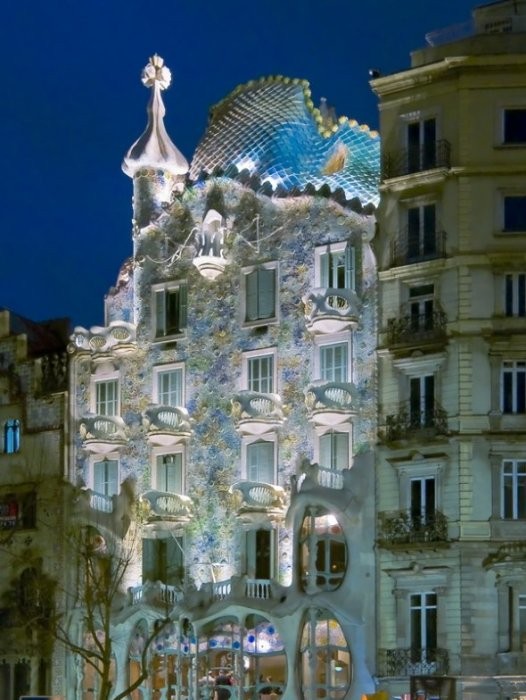
Casa Batlló in Barcelona
Casa Batlló - dwelling house, built in 1877 for textile magnate Josep Batlló-and-Kasanovasa at: Passech de Gracia, 43 in the Eixample district of Barcelona, and rebuilt by architect Antonio Gaudi in the years 1904-1906.
Not yet graduated from the construction of the Park Güell, Gaudi was commissioned to rework apartment building owned by the family of a wealthy textile industrialist Josep Batlló-and-Kasanovas and located adjacent to the modernist house Amal. The owner of the house was going to demolish an old building in 1875 and build in its place a new, but Gaudi decided otherwise.
Retaining the original structure of the house adjoining the side walls of two adjacent buildings, Gaudi designed the two new facade. The main facade overlooks the avenue Passeig de Gracia, rear - into the quarter. In addition, Gaudi completely redesigned ground floor and first floor, created an original furniture, and added a basement, attic and asoteyu (stepped roof terrace). Two light shafts were merged into a single courtyard, allowing for better daylight and ventilation of the building. The idea of giving the inner courtyards of special importance, first implemented in the home Batlló, Gaudí, and was used during the construction of houses Mila.
Many researchers recognize the creativity of Gaudi, that reconstruction of homes Batlló is the beginning of a new creative phase of the master: with this project, Gaudí's architectural decisions to be dictated solely by his own vision of the plastic without regard to the well-known architectural styles.
The most remarkable feature of the house Batlló is the almost complete absence in his design of straight lines. Wavy shape appear as a decorative detail of the facade, carved from stone adze produced at Barcelona's Montjuic hill, and in the interior. There are many interpretations of the symbolism of the main facade, but, apparently, is the most correct interpretation of the building as a giant figure of a dragon - a favorite character of Gaudi, appearing in many of his creations. The victory of the patron saint of Catalonia, of St. George over the dragon may be an allegory of the triumph of good over evil. Sword of St. George, vonzenny in the ridge Dragon ", is presented in the form of towers, topped with the George Cross, the facade of the building depicts a sparkling" scales "monsters and littered with bones and skulls," his victims, who guessed the columns in the forms of mezzanine and balconies.
Subscribe to:
Posts (Atom)